Brunelleschi Dome & Cathedral: Premium Skip The Line Ticket
Experience Filippo Brunelleschi, the genius who designed the famous dome (Cupola), was actually a trained goldsmith and clockmaker, not an architect. When he won the competition to build the dome in 1418, he refused to show his full plans to the city officials because he was paranoid that someone would steal his ideas. He simply promised he could build it without using traditional wooden scaffolding—a claim that seemed impossible at the time.
Even though it was completed in 1436, Brunelleschi’s dome remains the largest dome in the world built from brick and mortar. It contains over 4 million bricks and weighs an estimated 37,000 metric tons. Admire Brunelleschi's architectural masterpiece at the Florence Cathedral Admire Brunelleschi's architectural masterpiece at the Florence Cathedral
- Detail
- Admire Brunelleschi's architectural masterpiece at the Florence Cathedral
- Detail
- Admire Brunelleschi's architectural masterpiece at the Florence Cathedral
Baptistery of St. John
format:church Rating 4.6 9593 reviews Most visitors photograph the Cathedral and move on without noticing the Baptistery directly in front of them — which is actually older, and in many ways more astonishing. The Baptistery of San Giovanni dates to the 11th century and may have even earlier foundations on a Roman building. Ghiberti's eastern doors — called the 'Doors of Paradise' by Michelangelo himself — took the sculptor 27 years to complete, from 1425 to 1452. The panels you see today are gilded bronze replicas (the originals are in the Museo dell'Opera del Duomo), but their narrative detail is staggering: ten Old Testament scenes rendered with a mastery of perspective that was revolutionary for its time. As for Brunelleschi's dome above, it was built without any internal wooden centering — a structural feat no one before him had attempted at that scale, and which engineers still study today. Highly 4.6-star church with 9,593 reviews. Highly 4.6-star church with 9,593 reviews. Open now Highly rated Popular derived:iconic cultural_style:architecture cultural_style:architecture
- Detail
- Highly 4.6-star church with 9,593 reviews.
- Detail
- Highly 4.6-star church with 9,593 reviews.
- Detail
- Church
- Detail
- 4.6 • 9.6k reviews
- Detail
- Open now
- Detail
- Open now
- Detail
- Highly rated
- Detail
- Popular
- Detail
- cultural_style:architecture
- Detail
- cultural_style:architecture
Florence Cathedral: Guided Tour
Experience When you look at the Duomo, the stunning exterior clad in pink, green, and white marble looks like a masterpiece of the Renaissance. Surprisingly, it isn't! The original facade was only partially completed and was eventually torn down in the 16th century. The church sat with a bare, ugly brick front for nearly 300 years. The beautiful neo-Gothic facade you see today was actually designed by Emilio De Fabris and completed in 1887.
At the very top of the dome sits a massive golden copper sphere (the palla) and a cross. It was designed and cast by the artist Andrea del Verrocchio in 1469. Working as a young apprentice in Verrocchio's workshop at the time was none other than Leonardo da Vinci. Historians believe young Leonardo helped design the complex hoisting machines used to lift the two-ton copper ball to the top of the lantern. Skip the line and enjoy a beginner's guide to Florence's delightful Duomo Skip the line and enjoy a beginner's guide to Florence's delightful Duomo
- Detail
- Skip the line and enjoy a beginner's guide to Florence's delightful Duomo
- Detail
- Skip the line and enjoy a beginner's guide to Florence's delightful Duomo
Boboli Gardens
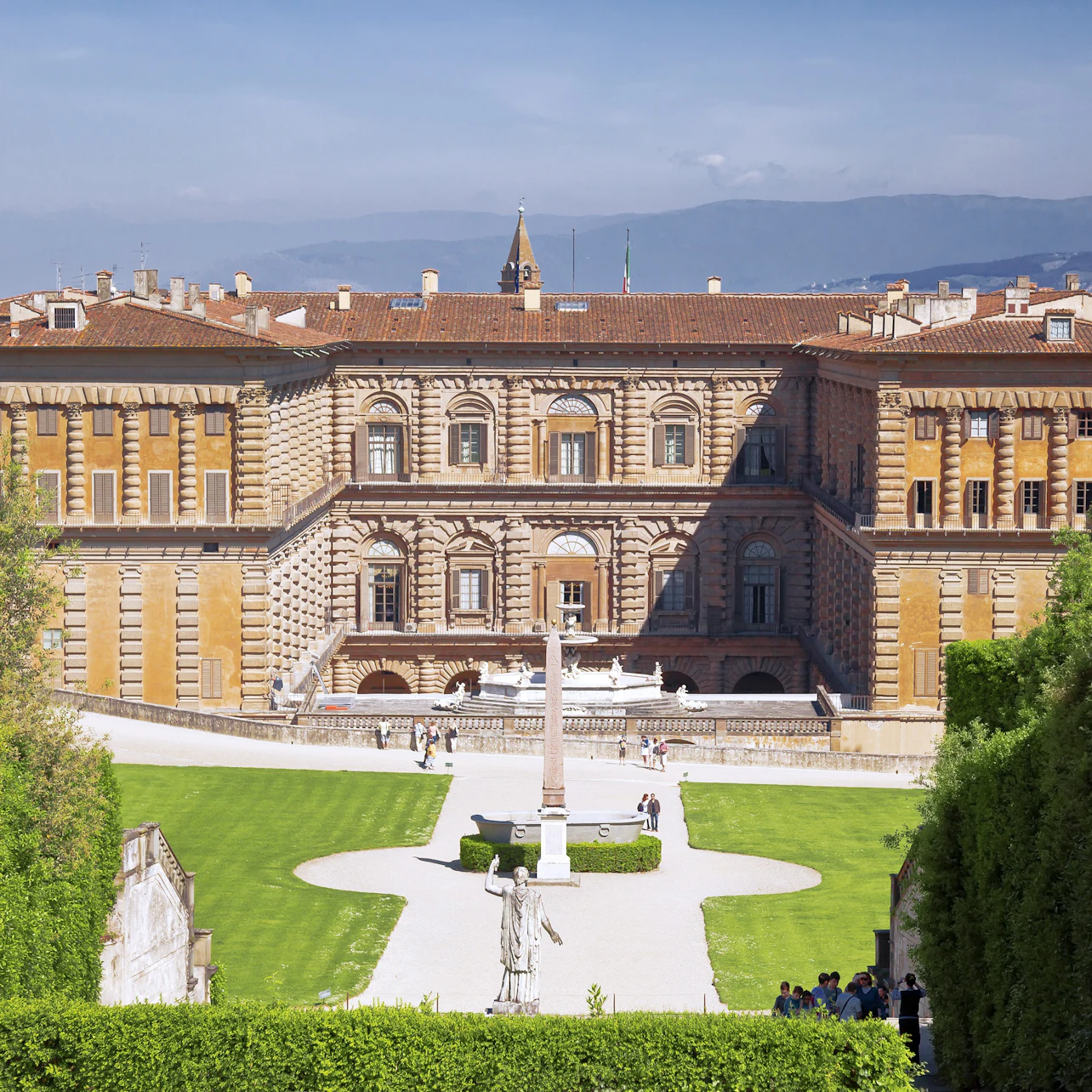
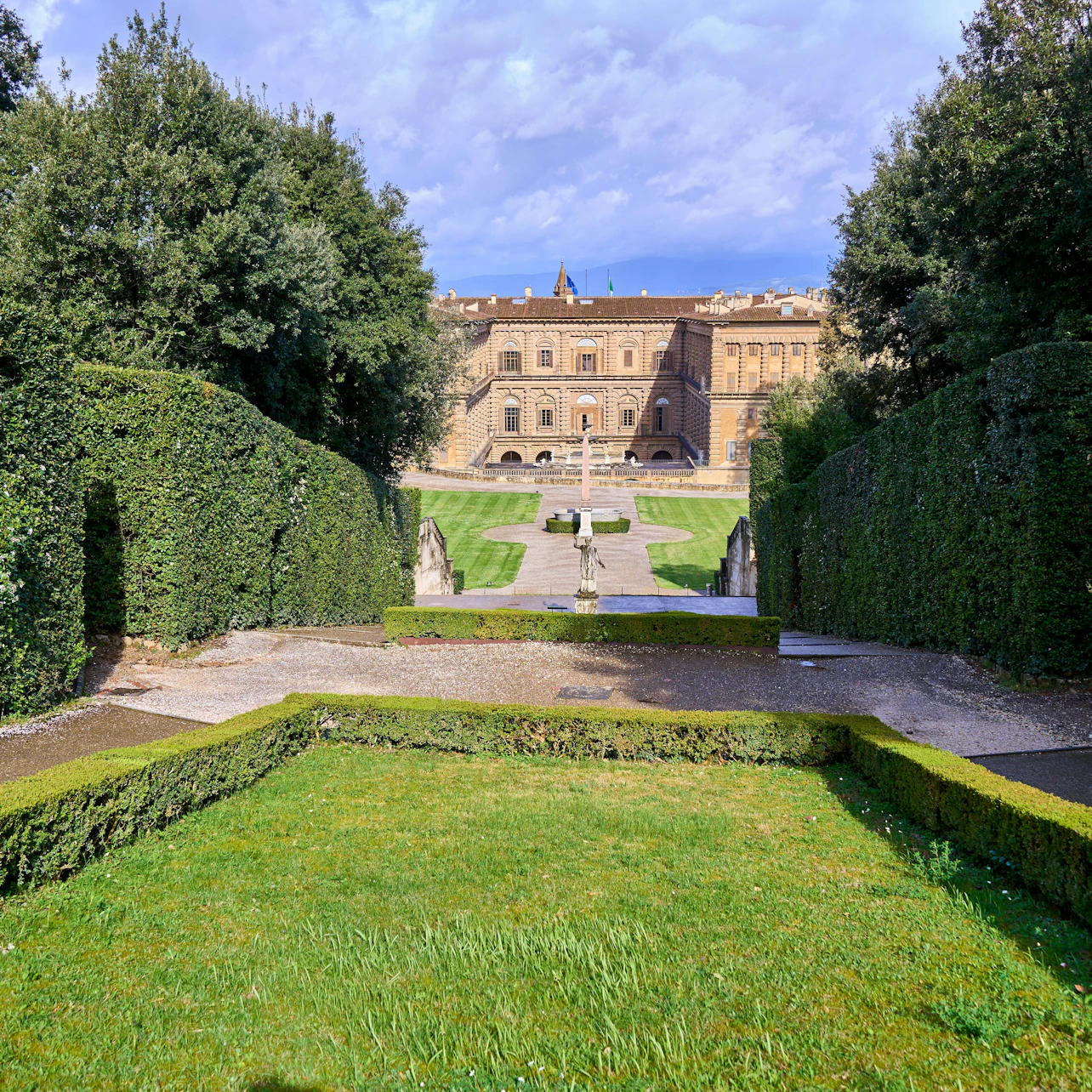
format:park Rating 4.2 29830 reviews Eleonora di Toledo, wife of Cosimo I de' Medici, acquired the Palazzo Pitti and its surrounding hill in 1549 with one express purpose: to create a garden that would project Medici power as clearly as any palace or painting. What emerged over the following decades — designed first by Niccolò Tribolo, then refined by a succession of architects and sculptors — was one of the most influential gardens in Western history, the direct template from which French formal gardens, including Versailles, drew their inspiration. It contains roughly 80 sculptures spanning five centuries, a Roman-era Egyptian obelisk brought from Luxor, the theatrical baroque Isolotto island garden at its far end, and the 18th-century Kaffeehaus pavilion perched on the hill with one of Florence's more quietly spectacular panoramic views. Highly 4.2-star establishment with 29,830 reviews. Highly 4.2-star establishment with 29,830 reviews. Open now Popular derived:trending format:park format:park
- Detail
- Highly 4.2-star establishment with 29,830 reviews.
- Detail
- Highly 4.2-star establishment with 29,830 reviews.
- Detail
- Park
- Detail
- 4.2 • 29.8k reviews
- Detail
- Open now
- Detail
- Open now
- Detail
- Popular
- Detail
- format:park
- Detail
- format:park
Palazzo Pitti & Boboli Gardens: Reserved Entrance + Florence City Audio Guide
Experience People often treat the Boboli as an afterthought — something to walk through after the Pitti Palace — but giving it a real two hours is one of the better decisions you can make in Florence. The garden rewards slow movement: taking the path up toward the Porcelain Museum, pausing at the giant stone basin where Medici children once played, finding a stone bench in a shaded grove and simply listening. In a city that can feel relentlessly vertical — climbing stairs to every viewpoint, jostling through narrow streets — the Boboli's horizontal sweep of green, with the Tuscan hills rolling away beyond the walls, gives your eyes and your nervous system real room to breathe. Visit Pitti Palace and explore the botanical beauty of Florentine gardens Visit Pitti Palace and explore the botanical beauty of Florentine gardens
- Detail
- Visit Pitti Palace and explore the botanical beauty of Florentine gardens
- Detail
- Visit Pitti Palace and explore the botanical beauty of Florentine gardens
Boboli Gardens: Reserved Entry + Audio Guide
Experience A lush sculpture park with views of Tuscan countryside A lush sculpture park with views of Tuscan countryside
- Detail
- A lush sculpture park with views of Tuscan countryside
- Detail
- A lush sculpture park with views of Tuscan countryside
Uffizi Gallery: Reserved Entry
Experience The greatest collection of Italian Renaissance art in the world, housing masterpieces by Michelangelo, Leonardo da Vinci, Botticelli, and Raphael.
The word Uffizi translates to "offices" in Italian. In 1560, Grand Duke Cosimo I de' Medici commissioned the architect Giorgio Vasari to build a massive complex to house the administrative and legal offices of Florence. The top floor was built with large windows to let in natural light, and the Medici family eventually started using that specific hallway to display their private collection of statues and paintings. Over time, the art took over the entire building.
By the early 1700s, the mighty Medici dynasty was dying out. The last surviving member of the family was a woman named Anna Maria Luisa de' Medici. Knowing her family’s line was ending and that foreign powers would soon take over Florence, she created a brilliant legal document in 1737 called the "Family Pact." She bequeathed the entire, priceless Medici art collection to the city of Florence—with the strict condition that no piece of art could ever leave the city. Thanks to her, the Uffizi’s collection remains intact today.
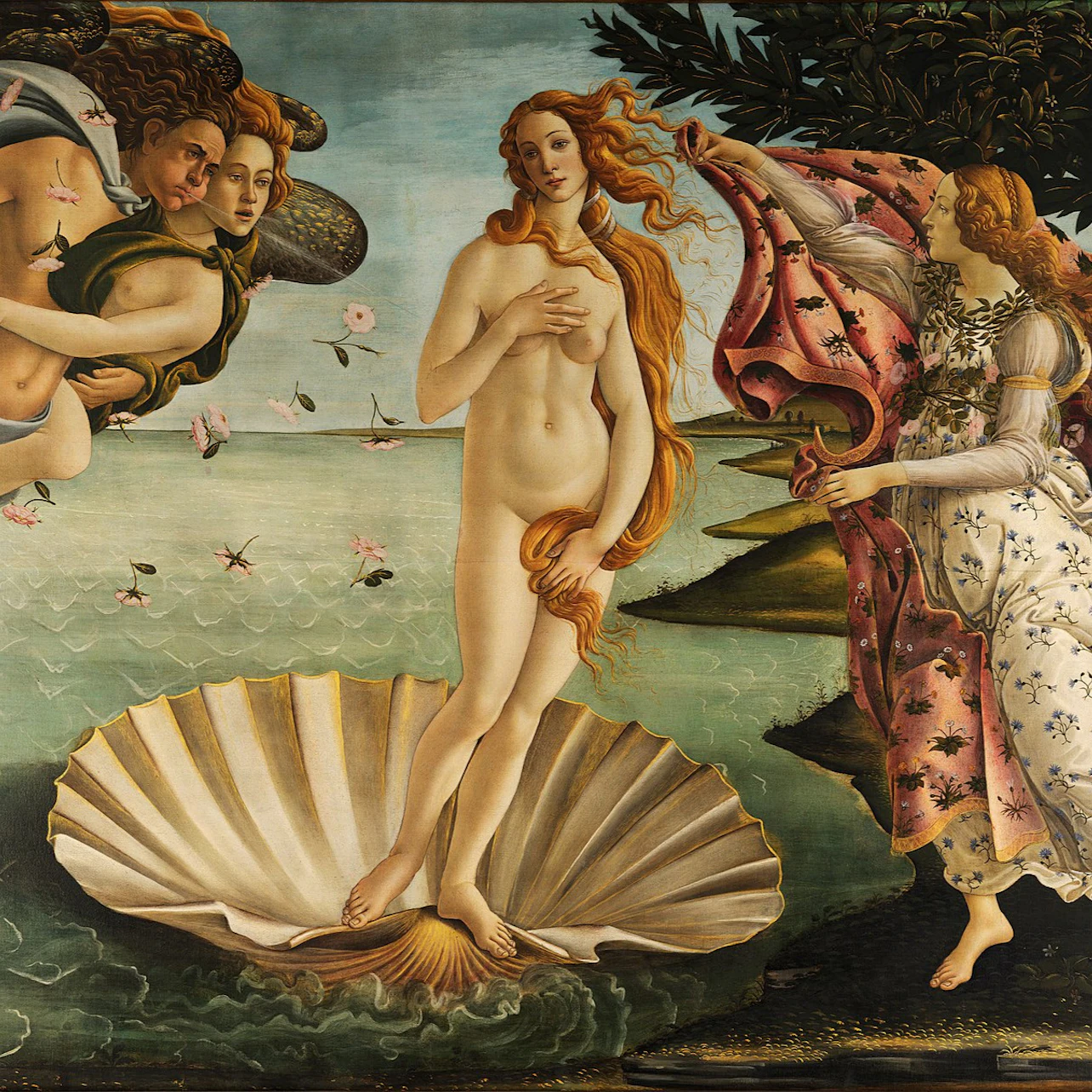
The Uffizi is most famous for Sandro Botticelli’s breathtaking paintings, The Birth of Venus and Primavera. However, these pagan, mythological works were highly controversial at the time. In the 1490s, a radical monk named Girolamo Savonarola took over Florence and ordered the "Bonfire of the Vanities," where citizens burned books, cosmetics, and art deemed sinful. Botticelli himself was a follower of Savonarola and actually threw several of his own paintings into the fire! Fortunately, Venus and Primavera were hidden away in a Medici country villa and spared from the flames.
In 1911, the Mona Lisa was famously stolen from the Louvre in Paris by an Italian handyman named Vincenzo Peruggia. He believed the painting had been looted by Napoleon and rightfully belonged in Italy. Two years later, in 1913, Peruggia traveled to Florence and tried to sell the masterpiece to the director of the Uffizi Gallery. The director authenticated it, called the police, and had Peruggia arrested. The Mona Lisa was briefly displayed in the Uffizi before being returned to France. See ancient Roman sculptures and Greek original copies See ancient Roman sculptures and Greek original copies
- Detail
- See ancient Roman sculptures and Greek original copies
- Detail
- See ancient Roman sculptures and Greek original copies
Museo Ferragamo
format:museum Rating 4.5 1391 reviews Salvatore Ferragamo grew up in poverty in southern Italy, emigrated to California as a teenager, and spent years in Hollywood making shoes for the film industry — his clients included Rudolph Valentino, Mary Pickford, and Douglas Fairbanks, and he later claimed to have shod almost every major actress working in silent film. He moved to Florence in 1927 because, he wrote, nowhere else had the skilled artisans required to execute what he was imagining. The Palazzo Spini Feroni, where the family still maintains its headquarters, is one of the largest surviving private medieval palaces in Florence, built in 1289. Ferragamo's design innovations were extraordinary: he invented the wedge heel (using Sardinian cork during WWII when steel was unavailable), filed over 300 patents, and developed a theory of foot anatomy that he had studied through correspondence courses while running his workshop.
The museum holds over 10,000 shoe models — a record of one designer's creative life across six decades — displayed in rotating thematic exhibitions that often commission contemporary artists to respond to the archive. Highly 4.5-star establishment with 1,391 reviews. Highly 4.5-star establishment with 1,391 reviews. Open now Highly rated derived:iconic format:museum format:museum
- Detail
- Highly 4.5-star establishment with 1,391 reviews.
- Detail
- Highly 4.5-star establishment with 1,391 reviews.
- Detail
- Museum
- Detail
- 4.5 • 1.4k reviews
- Detail
- Open now
- Detail
- Open now
- Detail
- Highly rated
- Detail
- format:museum
- Detail
- format:museum
Villa di Castello
format:park Rating 4.6 1149 reviews Highly 4.6-star establishment with 1,149 reviews. Highly 4.6-star establishment with 1,149 reviews. Open now Highly rated derived:iconic format:park format:park
- Detail
- Highly 4.6-star establishment with 1,149 reviews.
- Detail
- Highly 4.6-star establishment with 1,149 reviews.
- Detail
- Circle the serene paths of this popular park, where lush greenery and historical charm create a peaceful escape just steps from the heart of Florence.
- Detail
- 4.6 • 1.1k reviews
- Detail
- Open now
- Detail
- Open now
- Detail
- Highly rated
- Detail
- format:park
- Detail
- format:park
Palazzo Gucci
format:clothing_store Rating 4.2 1783 reviews Guccio Gucci was born in Florence in 1881 but found his inspiration at the Savoy Hotel in London, where he worked as a lift attendant and obsessively studied the luggage of wealthy guests. He returned to Florence and opened his first leather goods shop in 1921. The building that now houses the Gucci Garden — the Palazzo della Mercanzia — was for centuries the court of Florence's trade guilds, where merchants came to settle commercial disputes under the carved stone insignia of their professions. Alessandro Michele conceived the Garden in 2018 not as a conventional museum but as an immersive artistic statement: each room reimagined by a different set designer, creating something closer to a surrealist dream than a fashion archive. Highly 4.2-star clothing store with 1,783 reviews. Highly 4.2-star clothing store with 1,783 reviews. Open now format:shopping format:shopping
- Detail
- Highly 4.2-star clothing store with 1,783 reviews.
- Detail
- Highly 4.2-star clothing store with 1,783 reviews.
- Detail
- Clothing store shopping
- Detail
- 4.2 • 1.8k reviews
- Detail
- Open now
- Detail
- Open now
- Detail
- format:shopping
- Detail
- format:shopping
Galleria dell’Accademia di Firenze
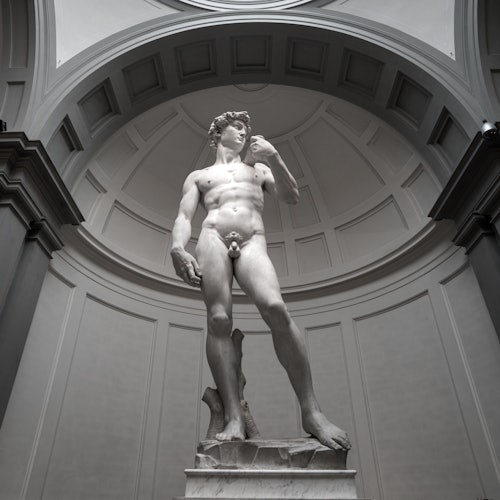
format:museum Rating 4.6 55103 reviews The Accademia was founded in 1784 as a teaching institution for art students, who were meant to study and copy the works on display. The David arrived in 1873, moved from the Piazza della Signoria — where it had stood since 1504 — to protect it from the elements and from a damaging riot that had already cost it a finger. The less commonly known story is the block itself: it was quarried from Carrara in 1464 and briefly worked by Agostino di Duccio, who gave up after barely making any progress. It sat abandoned in the courtyard of the Opera del Duomo for 25 years before a 26-year-old Michelangelo was commissioned in 1501 and carved the entire 5.17-meter figure in just over two years from a block another sculptor had already damaged. The Hall of the Prisoners, the long corridor leading to David, contains four of Michelangelo's unfinished Slaves — figures that appear to be pulling themselves free from raw marble, using the haunting technique the Italians call 'non-finito.' Highly 4.6-star establishment with 55,103 reviews. Highly 4.6-star establishment with 55,103 reviews. Open now Highly rated Popular derived:iconic derived:trending format:museum format:museum
- Detail
- Highly 4.6-star establishment with 55,103 reviews.
- Detail
- Highly 4.6-star establishment with 55,103 reviews.
- Detail
- Museum
- Detail
- 4.6 • 55.1k reviews
- Detail
- Open now
- Detail
- Open now
- Detail
- Highly rated
- Detail
- Popular
- Detail
- format:museum
- Detail
- format:museum
Accademia Gallery: Priority Entry Ticket
Experience Rating 4.3 6885 reviews View the statue of David and explore Renaissance artworks View the statue of David and explore Renaissance artworks cultural_style:design cultural_style:design
- Detail
- View the statue of David and explore Renaissance artworks
- Detail
- View the statue of David and explore Renaissance artworks
- Detail
- Climb aboard a priority entry ticket to bypass the lines and immerse yourself in Renaissance masterpieces at the Accademia Gallery on Via Ricasoli.
- Detail
- 4.3 • 6.9k reviews
- Detail
- cultural_style:design
- Detail
- cultural_style:design
Palazzo Strozzi: Rothko in Florence Exhibition
Experience See an exhibition of monumental works by Mark Rothko See an exhibition of monumental works by Mark Rothko
- Detail
- See an exhibition of monumental works by Mark Rothko
- Detail
- See an exhibition of monumental works by Mark Rothko
Giotto's Bell Tower
format:attraction Rating 4.8 7790 reviews Highly 4.8-star establishment with 7,790 reviews. Highly 4.8-star establishment with 7,790 reviews. Open now Highly rated Popular derived:iconic format:viewpoint format:viewpoint
- Detail
- Highly 4.8-star establishment with 7,790 reviews.
- Detail
- Highly 4.8-star establishment with 7,790 reviews.
- Detail
- Thread through the intricate Gothic architecture of Giotto's Bell Tower and ascend for panoramic views of Florence's stunning skyline.
- Detail
- 4.8 • 7.8k reviews
- Detail
- Open now
- Detail
- Open now
- Detail
- Highly rated
- Detail
- Popular
- Detail
- format:viewpoint
- Detail
- format:viewpoint
Loggia dei Lanzi
format:attraction Rating 4.8 1626 reviews Highly 4.8-star establishment with 1,626 reviews. Highly 4.8-star establishment with 1,626 reviews. Open now Highly rated derived:iconic
- Detail
- Highly 4.8-star establishment with 1,626 reviews.
- Detail
- Highly 4.8-star establishment with 1,626 reviews.
- Detail
- Circle the grand sculptures of Loggia dei Lanzi in Piazza della Signoria, where history and artistry intertwine beneath the open sky.
- Detail
- 4.8 • 1.6k reviews
- Detail
- Open now
- Detail
- Open now
- Detail
- Highly rated
Piazzale Michelangelo
format:attraction Rating 4.8 109152 reviews A perfect, almost compositionally impossible sweep of the city in a single glance: the Arno river winding through, the Ponte Vecchio anchoring the center frame, the Duomo and Palazzo Vecchio tower rising from the terracotta density of the old city, the Tuscan hills rolling away in every direction. Come in the hour before sunset and watch the light do what it does best in this part of the world.
Piazzale Michelangelo was created in 1869 by architect Giuseppe Poggi as part of a sweeping urban transformation that came when Florence briefly served as capital of the newly unified Italy between 1865 and 1871. The city was being modernized — wide boulevards were cut through the old city walls, the Lungarno promenades were developed — and Poggi designed this hilltop terrace specifically as a public viewing platform to rival the great scenic overlooks of Paris. The bronze replica of Michelangelo's David was installed in 1875, and four bronze casts of his Medici Chapel allegories — Dawn, Dusk, Day, Night — were arranged around the base. The piazza is, in architectural terms, a Victorian romantic fantasy, but the view it frames is the real, unchanged thing. Highly 4.8-star establishment with 109,152 reviews. Highly 4.8-star establishment with 109,152 reviews. Highly rated Popular derived:iconic derived:trending cultural_style:architecture cultural_style:architecture
- Detail
- Highly 4.8-star establishment with 109,152 reviews.
- Detail
- Highly 4.8-star establishment with 109,152 reviews.
- Detail
- Climb to Piazzale Michelangelo for a breathtaking view of Florence’s skyline, where the Arno River elegantly curves through the city.
- Detail
- 4.8 • 109.2k reviews
- Detail
- Highly rated
- Detail
- Highly rated
- Detail
- Popular
- Detail
- cultural_style:architecture
- Detail
- cultural_style:architecture
Orto Botanico Giardino dei Semplici - Università di Firenze
format:establishment Rating 4.1 1301 reviews Highly 4.1-star establishment with 1,301 reviews. Highly 4.1-star establishment with 1,301 reviews. Open now
- Detail
- Highly 4.1-star establishment with 1,301 reviews.
- Detail
- Highly 4.1-star establishment with 1,301 reviews.
- Detail
- Skim through the lush plant life and historic greenhouses at this botanical garden nestled in the heart of Florence's university district.
- Detail
- 4.1 • 1.3k reviews
- Detail
- Open now
- Detail
- Open now
Piazza del Duomo
format:route Highly rated route with reviews. Highly rated route with reviews.
- Detail
- Highly rated route with reviews.
- Detail
- Highly rated route with reviews.
- Detail
- Route
Basilica di San Lorenzo
format:church Rating 4.6 11654 reviews Highly 4.6-star church with 11,654 reviews. Highly 4.6-star church with 11,654 reviews. Open now Highly rated Popular derived:iconic derived:trending format:museum cultural_style:architecture format:museum cultural_style:architecture
- Detail
- Highly 4.6-star church with 11,654 reviews.
- Detail
- Highly 4.6-star church with 11,654 reviews.
- Detail
- Church museum
- Detail
- 4.6 • 11.7k reviews
- Detail
- Open now
- Detail
- Open now
- Detail
- Highly rated
- Detail
- Popular
- Detail
- format:museum
- Detail
- cultural_style:architecture
- Detail
- format:museum
- Detail
- cultural_style:architecture
Museo Novecento
format:museum Rating 4 1602 reviews What the museum does brilliantly is remind you that the 20th century was Italy's, too: Futurism, Metaphysical painting, Arte Povera, Spatialism — movements that were globally radical but are too often overshadowed in Florence by the Renaissance behemoths nearby. The collection includes works by Giorgio de Chirico, Giorgio Morandi, Lucio Fontana (his razor-slashed canvases are here), and Marino Marini, among many others, and the building's cloister hosts rotating contemporary installations.
Visiting the Novecento is a genuine act of pleasure — the rooms are uncrowded, the light is beautiful, and the experience feels like real discovery rather than an obligatory cultural check. Highly 4.0-star establishment with 1,602 reviews. Highly 4.0-star establishment with 1,602 reviews. Open now format:museum format:museum
- Detail
- Highly 4.0-star establishment with 1,602 reviews.
- Detail
- Highly 4.0-star establishment with 1,602 reviews.
- Detail
- Museum
- Detail
- 4.0 • 1.6k reviews
- Detail
- Open now
- Detail
- Open now
- Detail
- format:museum
- Detail
- format:museum
Ponte Vecchio
format:landmark Rating 4.7 149876 reviews Today, the bridge is famous for its glittering jewelry shops, but it wasn't always so glamorous. For centuries, the shops were occupied by butchers, fishmongers, and tanners who would dump their foul-smelling animal waste directly into the Arno River below. In 1593, Grand Duke Ferdinando I de' Medici decided he could no longer stand the putrid stench wafting up into his secret Vasari Corridor. He issued a decree evicting the butchers and mandated that only goldsmiths and jewelers could set up shop on the bridge.
If you look closely at the top of the shops on the eastern side of the bridge, you will see a row of small windows. This is the Vasari Corridor (Corridoio Vasariano). Built in 1565 by architect Giorgio Vasari for the ruling Medici family, this elevated, enclosed walkway is nearly a kilometer long. It allowed the Grand Duke Cosimo I de' Medici to commute from the government headquarters (Palazzo Vecchio) to his private residence (Palazzo Pitti) without having to walk through the muddy, crowded streets or risk being assassinated by his enemies.
During the German retreat from Italy in August 1944, the Nazi army blew up every single bridge in Florence to slow down the advancing Allied forces. The Ponte Vecchio was the only exception. According to local legend, Adolf Hitler had visited Florence in 1938, loved the view from the bridge, and personally ordered that it be spared. Highly 4.7-star establishment with 149,876 reviews. Highly 4.7-star establishment with 149,876 reviews. Highly rated Popular derived:iconic derived:trending
- Detail
- Highly 4.7-star establishment with 149,876 reviews.
- Detail
- Highly 4.7-star establishment with 149,876 reviews.
- Detail
- Landmark
- Detail
- 4.7 • 149.9k reviews
- Detail
- Highly rated
- Detail
- Highly rated
- Detail
- Popular
Piazza della Signoria
format:route Highly rated route with reviews. Highly rated route with reviews.
- Detail
- Highly rated route with reviews.
- Detail
- Highly rated route with reviews.
- Detail
- Route
Stibbert Museum
format:museum Rating 4.8 2753 reviews Frederick Stibbert was born in Florence in 1838 to a British father and Italian mother — his maternal grandfather had served as Governor-General of Bengal, leaving the family a substantial fortune. Stibbert received the family's Florentine villa at age 26 and devoted the remainder of his 68 years to filling it with an obsessive collection that now numbers over 36,000 objects. The armor collection is among the finest in the world: the Japanese section alone — featuring dozens of complete samurai warrior ensembles — would hold its own against collections in Tokyo. The famous Cavalry Hall features a theatrical procession of fully armored mannequins mounted on horseback, representing European, Ottoman, and Japanese warriors advancing in single file through a vaulted room. When Stibbert died in 1906, he left everything to the city of Florence, which continues to maintain it not in scholarly museum order but in the dense, labyrinthine arrangement of a private obsession. Highly 4.8-star establishment with 2,753 reviews. Highly 4.8-star establishment with 2,753 reviews. Open now Highly rated derived:iconic format:museum format:museum
- Detail
- Highly 4.8-star establishment with 2,753 reviews.
- Detail
- Highly 4.8-star establishment with 2,753 reviews.
- Detail
- Museum
- Detail
- 4.8 • 2.8k reviews
- Detail
- Open now
- Detail
- Open now
- Detail
- Highly rated
- Detail
- format:museum
- Detail
- format:museum
Giardino delle Rose
format:park Rating 4.6 4466 reviews Highly 4.6-star establishment with 4,466 reviews. Highly 4.6-star establishment with 4,466 reviews. Open now Highly rated derived:iconic format:park format:park
- Detail
- Highly 4.6-star establishment with 4,466 reviews.
- Detail
- Highly 4.6-star establishment with 4,466 reviews.
- Detail
- Park
- Detail
- 4.6 • 4.5k reviews
- Detail
- Open now
- Detail
- Open now
- Detail
- Highly rated
- Detail
- format:park
- Detail
- format:park
Basilica di San Miniato
format:church Rating 4.8 6316 reviews San Miniato al Monte is, by most assessments, one of the finest Romanesque churches in Italy — and given the competition, that's a remarkable claim. The first church on this hillside was built in the early 11th century over what was believed to be the tomb of Saint Miniato, a 3rd-century martyr who, according to legend, carried his own severed head up this hill after his execution in the amphitheater below. The geometric marble facade — white Carrara and green Prato marble in patterns of precise mathematical harmony — was completed through the 12th and 13th centuries. Inside, the floor is an extraordinary example of medieval cosmatesque marble inlay, zodiac signs and symbolic animals woven into stone with staggering complexity. The Benedictine monks who have maintained this church continuously since 1018 still produce honey, herbal liqueurs, and cosmetics in the monastery behind it, sold in a small shop by the entrance. Highly 4.8-star church with 6,316 reviews. Highly 4.8-star church with 6,316 reviews. Open now Highly rated Popular derived:iconic cultural_style:architecture cultural_style:architecture
- Detail
- Highly 4.8-star church with 6,316 reviews.
- Detail
- Highly 4.8-star church with 6,316 reviews.
- Detail
- Church
- Detail
- 4.8 • 6.3k reviews
- Detail
- Open now
- Detail
- Open now
- Detail
- Highly rated
- Detail
- Popular
- Detail
- cultural_style:architecture
- Detail
- cultural_style:architecture
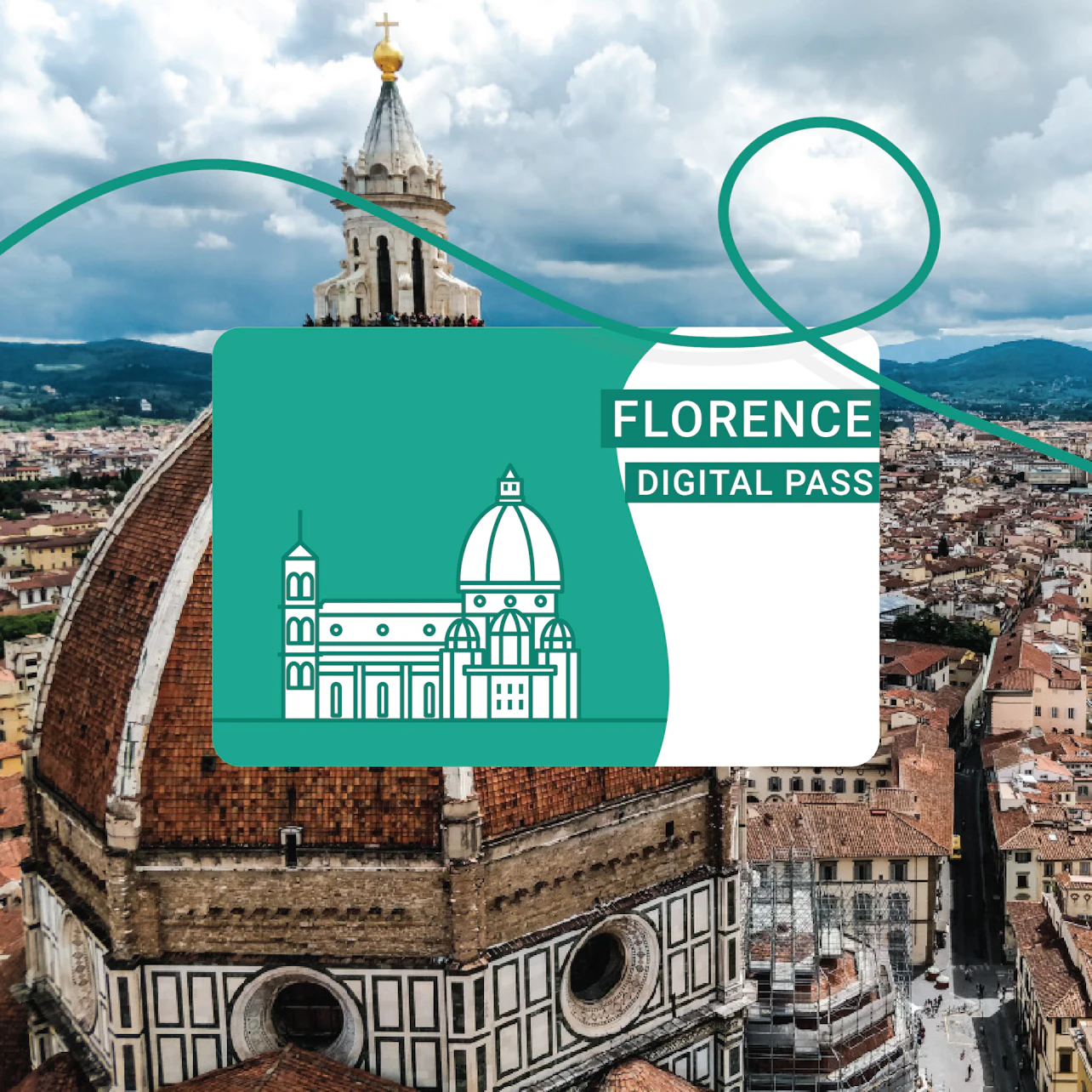
The Florence Pass
Experience Uffizi Gallery, Accademia Gallery, and Brunelleschi's Dome, all in one ticket! Uffizi Gallery, Accademia Gallery, and Brunelleschi's Dome, all in one ticket!
- Detail
- Uffizi Gallery, Accademia Gallery, and Brunelleschi's Dome, all in one ticket!
- Detail
- Uffizi Gallery, Accademia Gallery, and Brunelleschi's Dome, all in one ticket!
Caffè Gilli
format:bakery Rating 4.2 9901 reviews Price level 3 Gilli has been pouring coffee since 1733, making it older than the United States. Founded by a Swiss confectioner family, the café moved to its current home in Piazza della Repubblica in 1910, when the entire piazza was carved out of what had been Florence's medieval Jewish ghetto and the site of the ancient Roman forum beneath. The Belle Époque interior — gilded mirrors, polished marble countertops, painted ceilings — was designed to signal Florentine modernity at the turn of the 20th century, and it has barely changed since. Highly 4.2-star bakery with 9,901 reviews. Highly 4.2-star bakery with 9,901 reviews. Open now Popular format:bar format:cafe format:restaurant format:bar format:cafe format:restaurant
- Detail
- Highly 4.2-star bakery with 9,901 reviews.
- Detail
- Highly 4.2-star bakery with 9,901 reviews.
- Detail
- Shop bar
- Detail
- 4.2 • 9.9k reviews
- Detail
- Upscale
- Detail
- Open now
- Detail
- Open now
- Detail
- Popular
- Detail
- format:bar
- Detail
- format:cafe
- Detail
- format:restaurant
- Detail
- format:bar
- Detail
- format:cafe
- Detail
- format:restaurant
Ristorante dei Rossi Ponte Vecchio
format:food Rating 4.9 3047 reviews Price level 2 Highly 4.9-star establishment with 3,047 reviews. Highly 4.9-star establishment with 3,047 reviews. Highly rated derived:iconic format:restaurant format:restaurant
- Detail
- Highly 4.9-star establishment with 3,047 reviews.
- Detail
- Highly 4.9-star establishment with 3,047 reviews.
- Detail
- Find a spot at Piazza dei Rossi for expertly crafted dishes paired with stunning views of the Ponte Vecchio, where every bite feels like a taste of history.
- Detail
- 4.9 • 3.0k reviews
- Detail
- Moderate
- Detail
- Highly rated
- Detail
- Highly rated
- Detail
- format:restaurant
- Detail
- format:restaurant
La tenda rossa
format:food Rating 4.8 2602 reviews Highly 4.8-star establishment with 2,602 reviews. Highly 4.8-star establishment with 2,602 reviews. Highly rated derived:iconic format:restaurant format:restaurant
- Detail
- Highly 4.8-star establishment with 2,602 reviews.
- Detail
- Highly 4.8-star establishment with 2,602 reviews.
- Detail
- Sit at the rustic wooden tables and enjoy authentic Tuscan dishes prepared with fresh, local ingredients in the heart of Florence.
- Detail
- 4.8 • 2.6k reviews
- Detail
- Highly rated
- Detail
- Highly rated
- Detail
- format:restaurant
- Detail
- format:restaurant
Trattoria Sergio Gozzi
format:food Rating 4.7 2021 reviews Price level 2 Sergio Gozzi opened his trattoria in 1915, just steps from the San Lorenzo market, to feed the market workers, merchants, and artisans who needed a proper lunch before returning to work. More than a century later, almost nothing has changed. There is no printed menu — you're told what's available, as though you've been invited into someone's home.
This is not the Florence you'll find in travel magazines, and that's entirely the point. The dining room is small and always full — businesspeople from nearby offices, elderly regulars who've been coming for decades, the occasional bewildered tourist who wandered in off the market street and hit the jackpot. Highly 4.7-star establishment with 2,021 reviews. Highly 4.7-star establishment with 2,021 reviews. Highly rated derived:iconic format:restaurant format:restaurant
- Detail
- Highly 4.7-star establishment with 2,021 reviews.
- Detail
- Highly 4.7-star establishment with 2,021 reviews.
- Detail
- Food restaurant
- Detail
- 4.7 • 2.0k reviews
- Detail
- Moderate
- Detail
- Highly rated
- Detail
- Highly rated
- Detail
- format:restaurant
- Detail
- format:restaurant
Manifattura
format:bar Rating 4.7 896 reviews Price level 2 Italy's relationship with its own spirits is a surprisingly underappreciated subject — amaro, grappa, vermouth, and bitter liqueurs were refined and codified by Italian producers across centuries, yet cocktail culture in Italy long remained secondary to wine. Manifattura was conceived as a corrective: a bar dedicated entirely to the Italian spirits canon, housed in a space designed with genuine mid-century Italian flair — clean lines, warm wood, period furniture, vintage music drifting from a record player. The bar team approaches Italian spirits the way a sommelier approaches wine: with obsession, historical context, and a real desire to share what they know. Highly 4.7-star bar with 896 reviews. Highly 4.7-star bar with 896 reviews. Highly rated derived:local_favorite format:bar format:bar
- Detail
- Highly 4.7-star bar with 896 reviews.
- Detail
- Highly 4.7-star bar with 896 reviews.
- Detail
- Bar
- Detail
- 4.7 • 896 reviews
- Detail
- Moderate
- Detail
- Highly rated
- Detail
- Highly rated
- Detail
- format:bar
- Detail
- format:bar
Osteria delle Tre Panche - Centro Storico
format:food Rating 4.3 1269 reviews Price level 3 Tre Panche — 'three benches' — is the kind of restaurant that Florentines keep quiet, not out of selfishness but because places like this survive on intimacy. The name recalls the three original benches that furnished the osteria in its earliest incarnation, in a neighborhood of scholars, monks, and painters that has always valued quiet over spectacle. The kitchen has made truffles its obsession: black and white, fresh and preserved, folded into pastas, draped over crostini, coaxed into sauces that smell like the Umbrian forests where they're dug up in the early morning by trained dogs and their handlers. Highly 4.3-star establishment with 1,269 reviews. Highly 4.3-star establishment with 1,269 reviews. derived:local_favorite format:restaurant format:restaurant
- Detail
- Highly 4.3-star establishment with 1,269 reviews.
- Detail
- Highly 4.3-star establishment with 1,269 reviews.
- Detail
- Food restaurant
- Detail
- 4.3 • 1.3k reviews
- Detail
- Upscale
- Detail
- format:restaurant
- Detail
- format:restaurant
Enoteca Pitti Gola e Cantina
format:bar Rating 4.7 962 reviews Price level 2 Pitti Gola e Cantina earns its reputation through absolute consistency and a refusal to compete on anything other than the quality of what's in the glass. Directly opposite the vast stone facade of Palazzo Pitti — which has housed Medici, Habsburg, and Savoy royalty across four centuries — the enoteca occupies a small room with bottles lining every wall and a list focused almost entirely on small, artisanal Italian producers who lack distribution deals or marketing budgets. The owners have spent years building direct relationships with producers across Tuscany, Piedmont, Sicily, and beyond, assembling a list that reads like a hand-drawn map of Italian wine's most interesting corners. Highly 4.7-star bar with 962 reviews. Highly 4.7-star bar with 962 reviews. Highly rated derived:local_favorite format:bar format:restaurant format:wine_bar format:bar format:restaurant format:wine_bar
- Detail
- Highly 4.7-star bar with 962 reviews.
- Detail
- Highly 4.7-star bar with 962 reviews.
- Detail
- Bar
- Detail
- 4.7 • 962 reviews
- Detail
- Moderate
- Detail
- Highly rated
- Detail
- Highly rated
- Detail
- format:bar
- Detail
- format:restaurant
- Detail
- format:wine_bar
- Detail
- format:bar
- Detail
- format:restaurant
- Detail
- format:wine_bar
Locale Firenze
format:bar Rating 4.4 1573 reviews Price level 4 Consistently ranked among the world's best bars. Set in a restored Renaissance palazzo with a glass-roofed courtyard and a medieval basement. Highly 4.4-star bar with 1,573 reviews. Highly 4.4-star bar with 1,573 reviews. derived:local_favorite format:bar format:restaurant format:bar format:restaurant
- Detail
- Highly 4.4-star bar with 1,573 reviews.
- Detail
- Highly 4.4-star bar with 1,573 reviews.
- Detail
- Bar
- Detail
- 4.4 • 1.6k reviews
- Detail
- Expensive
- Detail
- format:bar
- Detail
- format:restaurant
- Detail
- format:bar
- Detail
- format:restaurant
Ditta Artigianale Via dello Sprone Specialty Coffee
format:cafe Rating 4.3 3119 reviews Price level 2 Francesco Sanapo, who founded Ditta Artigianale, was Italy's national barista champion — a title that in Italy means something genuinely serious, given the country's almost theological relationship with coffee. He opened his first location in the centro storico to fight for specialty coffee in a city where 'a good espresso' had long meant dark-roasted, fast-pulled, and slightly bitter. The Oltrarno outpost channels the neighborhood's artisan spirit directly into the café format: beans are sourced from farms with whom the roastery has direct relationships, roasted on-site, and prepared with the same care a chef gives to a tasting menu. The space is designed with an architect's eye — industrial elements softened by warm wood and cascading plant life. Highly 4.3-star cafe with 3,119 reviews. Highly 4.3-star cafe with 3,119 reviews. Open now derived:local_favorite format:cafe format:restaurant format:cafe format:restaurant
- Detail
- Highly 4.3-star cafe with 3,119 reviews.
- Detail
- Highly 4.3-star cafe with 3,119 reviews.
- Detail
- Shop cafe
- Detail
- 4.3 • 3.1k reviews
- Detail
- Moderate
- Detail
- Open now
- Detail
- Open now
- Detail
- format:cafe
- Detail
- format:restaurant
- Detail
- format:cafe
- Detail
- format:restaurant
La Ménagère
format:food Rating 4.2 7355 reviews Price level 2 The space La Ménagère occupies in Via de' Ginori has a poetic history: it was for decades the home of a traditional household goods store — the Florentine equivalent of a domestic department store, selling linens, tableware, and kitchenware to the middle-class families of the centro storico. When the concept café opened here in 2015, the designers leaned directly into that history, creating a space where flowers, books, ceramics, fabrics, and food coexist without confusion — as though someone had folded a very beautiful home into a public room. The result is genuinely unlike anything else in Florence: part restaurant, part bar, part florist, part lifestyle store, with a design language of exposed brick, raw wood, hanging plants, and warm industrial lighting that has influenced café aesthetics across Italy. Highly 4.2-star establishment with 7,355 reviews. Highly 4.2-star establishment with 7,355 reviews. Open now Popular format:restaurant format:restaurant
- Detail
- Highly 4.2-star establishment with 7,355 reviews.
- Detail
- Highly 4.2-star establishment with 7,355 reviews.
- Detail
- Food restaurant
- Detail
- 4.2 • 7.4k reviews
- Detail
- Moderate
- Detail
- Open now
- Detail
- Open now
- Detail
- Popular
- Detail
- format:restaurant
- Detail
- format:restaurant
Il Santo Bevitore
format:food Rating 4.4 2190 reviews Price level 2 The name — 'The Holy Drinker' — is borrowed from Joseph Roth's melancholy novella about a vagrant in Paris who keeps receiving gifts of money and spending it before he can repay his debts, a figure of both dignity and ruin. The restaurant opened in the Oltrarno in the early 2000s and quickly became a reference point for a new kind of Florentine dining: one that took Tuscan ingredients with absolute seriousness but felt no obligation to replicate Renaissance recipes or trattoria tradition. The wine list is outstanding and leans toward small producers; the food menu changes constantly with the seasons and reads like a love letter to the Tuscan larder — cured meats, aged cheeses, wild herbs, fresh pasta — treated with the precision and imagination of a genuinely modern kitchen. Highly 4.4-star establishment with 2,190 reviews. Highly 4.4-star establishment with 2,190 reviews. derived:local_favorite format:restaurant format:restaurant
- Detail
- Highly 4.4-star establishment with 2,190 reviews.
- Detail
- Highly 4.4-star establishment with 2,190 reviews.
- Detail
- Food restaurant
- Detail
- 4.4 • 2.2k reviews
- Detail
- Moderate
- Detail
- format:restaurant
- Detail
- format:restaurant
Cafe degli Artigiani
format:cafe Rating 4.5 800 reviews Price level 1 Piazza della Passera is the kind of place that makes even seasoned Florence visitors question whether they've accidentally wandered off the map. The piazza is so small it barely registers on tourist radar: a few low buildings, a central stone well, window boxes, the sound of a radio from someone's kitchen window. Caffè degli Artigiani — 'The Craftsmen's Café' — sits at its edge, and the name is honest: this is a neighborhood bar for the people who live and work in the Oltrarno, the leather artisans, the restoration specialists who maintain the paintings in nearby churches, the workers who have been eating cornetti at this counter since before the neighborhood became fashionable. The coffee is excellent, the pastries are simple and fresh, and nobody is performing for anyone. Highly 4.5-star cafe with 800 reviews. Highly 4.5-star cafe with 800 reviews. Open now Highly rated derived:local_favorite format:cafe format:cafe
- Detail
- Highly 4.5-star cafe with 800 reviews.
- Detail
- Highly 4.5-star cafe with 800 reviews.
- Detail
- Café cafe
- Detail
- 4.5 • 800 reviews
- Detail
- Budget-friendly
- Detail
- Open now
- Detail
- Open now
- Detail
- Highly rated
- Detail
- format:cafe
- Detail
- format:cafe
Trattoria Mario
format:food Rating 4.6 4464 reviews Price level 1 Mario Marini opened his trattoria in 1953, and the third generation of the family is running it today with an admirable commitment to not changing a single essential thing. The room has wooden benches, long shared tables covered in paper, a blackboard menu, no reservations, and no dinner service — they close when the food runs out, which is usually well before 3pm. The Bistecca alla Fiorentina here uses Chianina beef — a breed of cattle raised in the Tuscan and Umbrian valleys whose meat has a distinctive flavor and marbling — served as ancient Florentine tradition demands: seared fast over a very hot wood fire, served rare to the point of rawness in the center, with nothing but olive oil, salt, and rosemary. The steak arrives on a cutting board, sold by weight, requiring no embellishment whatsoever. Highly 4.6-star establishment with 4,464 reviews. Highly 4.6-star establishment with 4,464 reviews. Highly rated derived:iconic format:restaurant format:restaurant
- Detail
- Highly 4.6-star establishment with 4,464 reviews.
- Detail
- Highly 4.6-star establishment with 4,464 reviews.
- Detail
- Food restaurant
- Detail
- 4.6 • 4.5k reviews
- Detail
- Budget-friendly
- Detail
- Highly rated
- Detail
- Highly rated
- Detail
- format:restaurant
- Detail
- format:restaurant
La Giostra
format:food Rating 4.3 3056 reviews Price level 3 Prince Dimitri Kunz d'Asburgo Lorena — a genuine descendant of the Habsburg-Lorraine dynasty that ruled Tuscany from 1737 until Italian unification — opened La Giostra in the early 1990s in a converted stable near Piazza Santa Croce. The name means 'carousel' or 'tournament' in Italian, and the restaurant has always operated with a theatrical quality that reflects its founder's aristocratic origins and his evident delight in feeding people well. The signature pear and ricotta ravioli in butter and sage has circulated among Florentines as a kind of holy text since the restaurant opened; the truffle dishes and the hazelnut tiramisù are similarly worshipped. The space is lit entirely by candlelight — no overhead lighting anywhere — and the low stone ceiling and closely set tables create the atmosphere of a medieval feast conducted with modern elegance. Highly 4.3-star establishment with 3,056 reviews. Highly 4.3-star establishment with 3,056 reviews. derived:local_favorite format:restaurant format:restaurant
- Detail
- Highly 4.3-star establishment with 3,056 reviews.
- Detail
- Highly 4.3-star establishment with 3,056 reviews.
- Detail
- Food restaurant
- Detail
- 4.3 • 3.1k reviews
- Detail
- Upscale
- Detail
- format:restaurant
- Detail
- format:restaurant
Trattoria 4 Leoni
format:food Rating 4.2 4095 reviews Price level 2 The restaurant's name recalls an old inn that once stood on this site, marked by the sign of four lions — the lion being Florence's civic symbol, the marzocco, used as an emblem by the guilds and noble families who defined the city's identity. The kitchen has been feeding this neighborhood for decades with a menu that honors tradition while allowing genuine inventiveness, and the pear and taleggio fiocchetti — pasta parcels that manage to be simultaneously rich, sweet, and savory — has become one of those dishes Florentines recommend to each other in whispers. Highly 4.2-star establishment with 4,095 reviews. Highly 4.2-star establishment with 4,095 reviews. format:restaurant format:restaurant
- Detail
- Highly 4.2-star establishment with 4,095 reviews.
- Detail
- Highly 4.2-star establishment with 4,095 reviews.
- Detail
- Food restaurant
- Detail
- 4.2 • 4.1k reviews
- Detail
- Moderate
- Detail
- format:restaurant
- Detail
- format:restaurant
Gucci Giardino
format:bar Rating 3.8 532 reviews Highly 3.8-star bar with 532 reviews. Highly 3.8-star bar with 532 reviews. Open now format:bar format:bar
- Detail
- Highly 3.8-star bar with 532 reviews.
- Detail
- Highly 3.8-star bar with 532 reviews.
- Detail
- Bar
- Detail
- 3.8 • 532 reviews
- Detail
- Open now
- Detail
- Open now
- Detail
- format:bar
- Detail
- format:bar
Osteria dei Baroncelli
format:food Rating 3.5 754 reviews Price level 2 Highly 3.5-star establishment with 754 reviews. Highly 3.5-star establishment with 754 reviews. format:restaurant format:restaurant
- Detail
- Highly 3.5-star establishment with 754 reviews.
- Detail
- Highly 3.5-star establishment with 754 reviews.
- Detail
- Food restaurant
- Detail
- 3.5 • 754 reviews
- Detail
- Moderate
- Detail
- format:restaurant
- Detail
- format:restaurant
Le Volpi e l'Uva
format:bar Rating 4.7 1255 reviews Price level 2 The name — 'The Foxes and the Grape' — is a direct reference to Aesop's fable about the fox who declares the grapes he cannot reach must be sour. Riccardo Comparini and Emilio Maccario opened this wine bar in 1992 in Piazza dei Rossi, a small square just steps from the Ponte Vecchio that feels entirely removed from its crowds. The philosophy from the beginning was simple: only small, artisan producers whose wines you won't find at the supermarket, served by the glass at a bar so intimate it holds perhaps 25 people at most. Their early focus on natural, biodynamic, and low-intervention wines predated the movement's mainstream popularity by years, and Le Volpi has maintained its position as one of Italy's essential wine destinations through absolute consistency and the principled refusal to expand or compromise. Highly 4.7-star bar with 1,255 reviews. Highly 4.7-star bar with 1,255 reviews. Highly rated derived:iconic format:bar format:bar
- Detail
- Highly 4.7-star bar with 1,255 reviews.
- Detail
- Highly 4.7-star bar with 1,255 reviews.
- Detail
- Liquor store bar
- Detail
- 4.7 • 1.3k reviews
- Detail
- Moderate
- Detail
- Highly rated
- Detail
- Highly rated
- Detail
- format:bar
- Detail
- format:bar
Via dè Tornabuoni
format:route Via de' Tornabuoni takes its name from the Tornabuoni family, the maternal relatives of Lorenzo de' Medici, and in the 15th century this street was lined with the palaces of Florence's great banking dynasties — the Rucellai, the Strozzi, the Tornabuoni themselves. The wealth that financed Botticelli, Ghirlandaio, and Filippino Lippi conducted its business from these buildings. Today the palaces house Gucci, Ferragamo, Bulgari, Prada, Armani, Versace — the luxury houses have simply replaced the banking dynasties as the latest expression of Florentine economic power, conducting their business from the same 15th-century stone facades. The Palazzo Strozzi, at the street's edge, begun in 1489 and considered the finest example of Renaissance domestic architecture in Italy, now hosts some of the country's most ambitious contemporary art exhibitions. Highly rated route with reviews. Highly rated route with reviews.
- Detail
- Highly rated route with reviews.
- Detail
- Highly rated route with reviews.
- Detail
- Route
Via della Vigna Nuova
format:route Running perpendicular to Via de' Tornabuoni, this street offers slightly more understated luxury and excellent Italian tailoring. Highly rated route with reviews. Highly rated route with reviews.
- Detail
- Highly rated route with reviews.
- Detail
- Highly rated route with reviews.
- Detail
- Route
Via dei Serragli
format:route Via dei Serragli, running through the heart of the Oltrarno, is where the artisans live: bookbinders using Renaissance techniques, leather workers finishing bags by hand, marble paper makers practicing the swirling carta marmorizzata that Florence effectively invented. Highly rated route with reviews. Highly rated route with reviews.
- Detail
- Highly rated route with reviews.
- Detail
- Highly rated route with reviews.
- Detail
- Route
Via Maggio
format:route Via Maggio — believed to derive from 'via maggiore,' the main road — was one of the most important streets in medieval Florence, the principal artery connecting the city to the south, and the palaces that line it were built by the same merchant families who funded the Renaissance. Today it's one of Europe's most concentrated stretches of serious antique dealing: dealers selling 17th-century Flemish paintings, baroque furniture, ancient maps, and Florentine ceramics from dimly lit shops whose interiors haven't changed in decades. Highly rated route with reviews. Highly rated route with reviews.
- Detail
- Highly rated route with reviews.
- Detail
- Highly rated route with reviews.
- Detail
- Route
The Mall Firenze
format:market Rating 4.2 9473 reviews Located about 45 minutes outside the city, it is a luxury outlet village featuring deeply discounted items from brands like Gucci, Prada, Balenciaga, and Bottega Veneta. Highly 4.2-star establishment with 9,473 reviews. Highly 4.2-star establishment with 9,473 reviews. Open now Popular format:market format:shopping format:market format:shopping
- Detail
- Highly 4.2-star establishment with 9,473 reviews.
- Detail
- Highly 4.2-star establishment with 9,473 reviews.
- Detail
- Shopping Mall market
- Detail
- 4.2 • 9.5k reviews
- Detail
- Open now
- Detail
- Open now
- Detail
- Popular
- Detail
- format:market
- Detail
- format:shopping
- Detail
- format:market
- Detail
- format:shopping
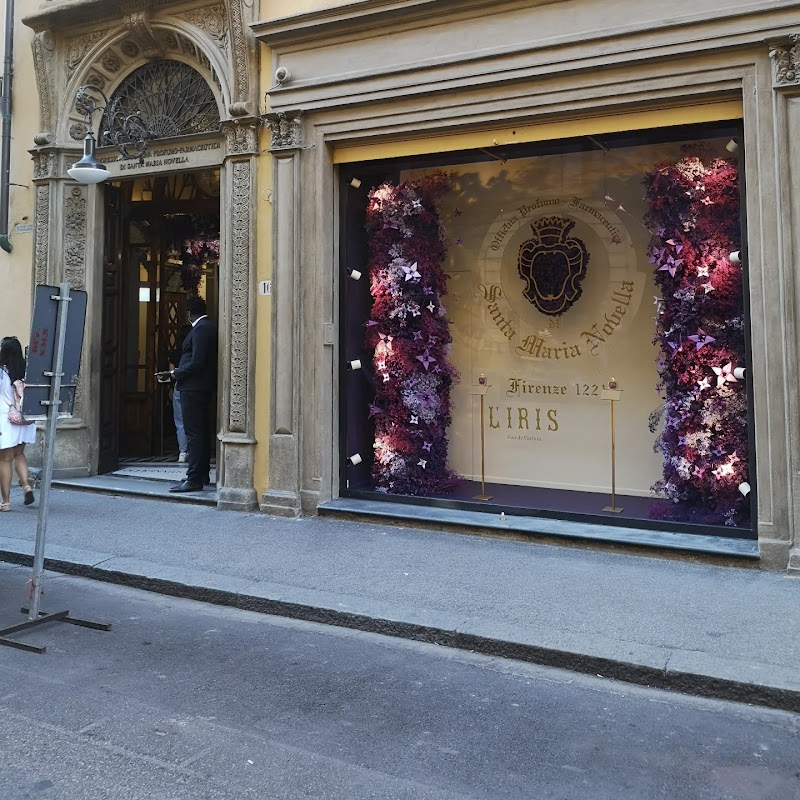
Officina Profumo - Farmaceutica di Santa Maria Novella
format:cosmetics_store Rating 4.6 3197 reviews Dominican friars established their pharmacy here in 1221, making it one of the oldest operating pharmacies in the world, predating modern medicine by centuries. The monks cultivated herbs in the monastery garden and created medicinal preparations, rose water, and aromatic compounds sold first to other monasteries and eventually to the Florentine aristocracy. The most famous story involves Catherine de' Medici, who in 1533 left Florence to marry the future King Henry II of France, taking with her the pharmacy's 'Acqua della Regina' — a citrus-based cologne that she introduced to the French court, where it became known as Eau de Cologne and permanently changed European perfumery. The main sales room was once the chapel of the Dogi: the frescoed vaulted ceiling and Gothic arched windows remain entirely intact. Highly 4.6-star cosmetics store with 3,197 reviews. Highly 4.6-star cosmetics store with 3,197 reviews. Highly rated derived:iconic format:shopping format:shopping
- Detail
- Highly 4.6-star cosmetics store with 3,197 reviews.
- Detail
- Highly 4.6-star cosmetics store with 3,197 reviews.
- Detail
- Cosmetics Store shopping
- Detail
- 4.6 • 3.2k reviews
- Detail
- Highly rated
- Detail
- Highly rated
- Detail
- format:shopping
- Detail
- format:shopping
Mercato Centrale
format:route Rating 4.4 1027 reviews The iron and glass structure of the Mercato Centrale was designed by Giuseppe Mengoni — the same architect who created Milan's Galleria Vittorio Emanuele II — and completed in 1874 as part of the modernization of post-unification Florence. The ground floor remains a genuinely working covered market: real butchers, fishmongers, cheesemakers, and produce vendors serving neighborhood restaurants and families. The first-floor food hall, opened after a major 2014 renovation, was built around the original iron trusses and skylights, preserving the industrial architecture while creating a curated space of regional food producers and artisan vendors. Unlike many European food halls that can feel corporate or touristy, this one maintains an authentic gravitational pull downward to the market below it. Highly 4.4-star route with 1,027 reviews. Highly 4.4-star route with 1,027 reviews. derived:local_favorite
- Detail
- Highly 4.4-star route with 1,027 reviews.
- Detail
- Highly 4.4-star route with 1,027 reviews.
- Detail
- Route
- Detail
- 4.4 • 1.0k reviews
LUISAVIAROMA
format:clothing_store Rating 3.9 734 reviews One of the most famous luxury concept stores in the world. It features a highly curated selection of established designer pieces and emerging avant-garde brands. The store's interior design changes frequently and is always a feast for the eyes. Highly 3.9-star clothing store with 734 reviews. Highly 3.9-star clothing store with 734 reviews. Open now format:shopping format:shopping
- Detail
- Highly 3.9-star clothing store with 734 reviews.
- Detail
- Highly 3.9-star clothing store with 734 reviews.
- Detail
- Clothing store shopping
- Detail
- 3.9 • 734 reviews
- Detail
- Open now
- Detail
- Open now
- Detail
- format:shopping
- Detail
- format:shopping
Scuola del Cuoio S.r.l.
format:shop Rating 4.6 706 reviews Located behind the apse of the Basilica of Santa Croce, this is where you go for authentic, handcrafted Florentine leather. You can watch the artisans at work and purchase beautifully crafted bags, jackets, and accessories, knowing they are 100% genuine and locally made. Highly 4.6-star establishment with 706 reviews. Highly 4.6-star establishment with 706 reviews. Open now Highly rated derived:local_favorite format:shopping format:shopping
- Detail
- Highly 4.6-star establishment with 706 reviews.
- Detail
- Highly 4.6-star establishment with 706 reviews.
- Detail
- Shop shopping
- Detail
- 4.6 • 706 reviews
- Detail
- Open now
- Detail
- Open now
- Detail
- Highly rated
- Detail
- format:shopping
- Detail
- format:shopping
Boutique Nadine
format:clothing_store Rating 4.4 116 reviews A beautifully curated boutique offering a mix of high-quality vintage clothing, independent contemporary brands, and unique accessories. It has a very chic, Parisian-meets-Florentine vibe. Highly 4.4-star clothing store with 116 reviews. Highly 4.4-star clothing store with 116 reviews. Open now derived:hidden_gem cultural_style:fashion format:shopping cultural_style:fashion format:shopping
- Detail
- Highly 4.4-star clothing store with 116 reviews.
- Detail
- Highly 4.4-star clothing store with 116 reviews.
- Detail
- Clothing store shopping
- Detail
- 4.4 • 116 reviews
- Detail
- Open now
- Detail
- Open now
- Detail
- cultural_style:fashion
- Detail
- format:shopping
- Detail
- cultural_style:fashion
- Detail
- format:shopping
Oltrarno
format:neighborhood This area is famous for its traditional artisans (artigiani). Wander the streets around Santo Spirito to find bespoke shoemakers, independent jewelry designers, and custom tailors. Highly rated neighborhood with reviews. Highly rated neighborhood with reviews.
- Detail
- Highly rated neighborhood with reviews.
- Detail
- Highly rated neighborhood with reviews.
- Detail
- Neighborhood